
A free UK educational resource from TD Consultancy
Designing Out Addiction
Change the conditions. Make recovery easier to start.
Harmful patterns are shaped by more than motivation. Rooms, routes, phones, money, relationships, access, stress, services and daily routines can all make a behaviour easier or harder to repeat.
The book is publishing soon · Join the publication list ↗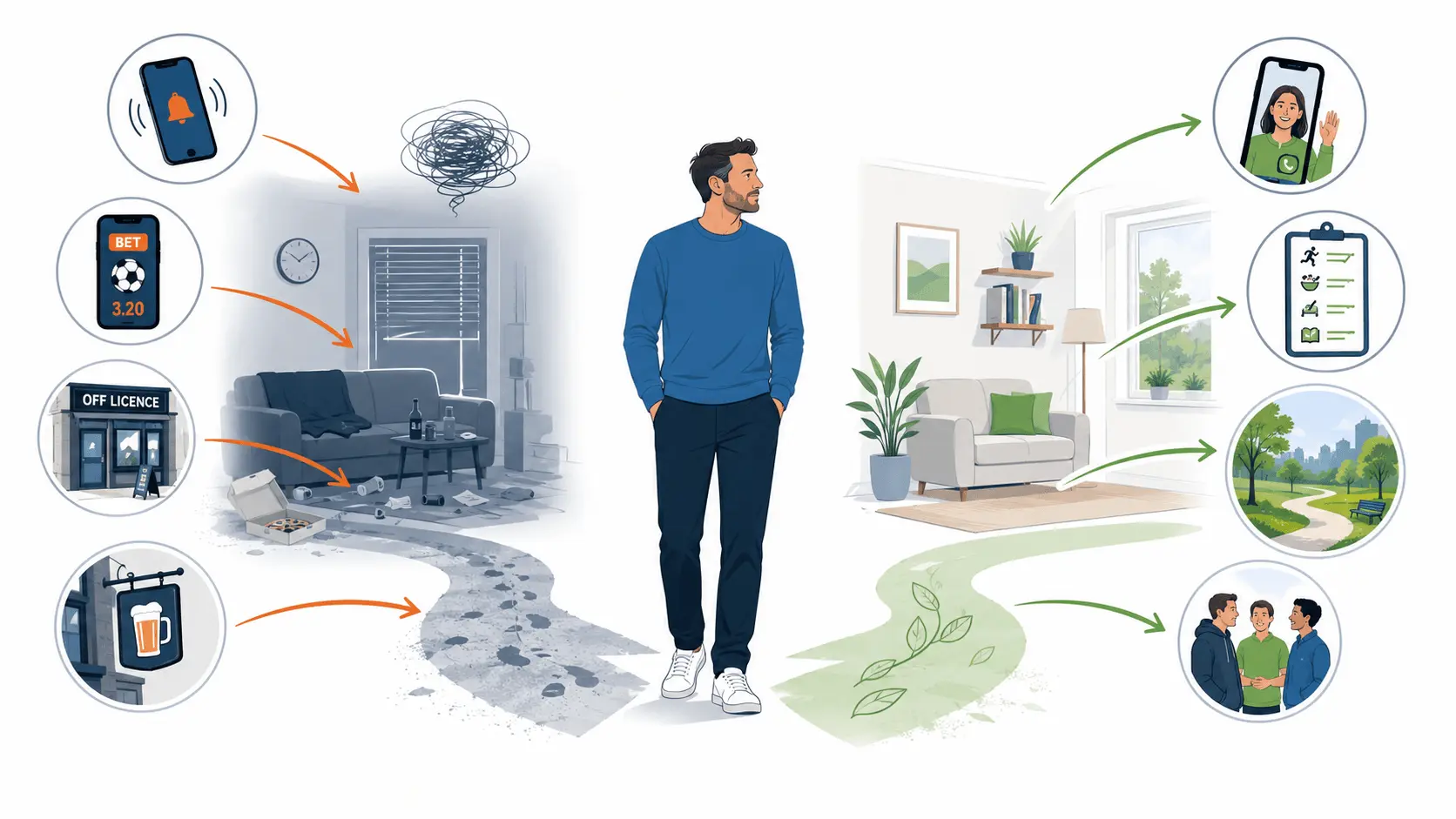
Start with the part of the day that keeps repeating
Map the earliest cue, choose one change you control and make the safer next action easier to begin.
Try one small change →Look earlier in the chain
The pattern is bigger than the behaviour
Instead of beginning with “Why won’t this stop?”, look at what repeatedly happens beforehand. Open any area to see where a small change could create a useful pause.
01Places+
How pressure can riseA room, street or venue can become linked with a familiar sequence before an urge is fully conscious.
A practical design responseChange one visible cue, use a different space, or plan a safer destination before the high-risk window begins.
AskWhich place seems to start the pattern earliest?
02People+
How pressure can riseA message, invitation, argument or period of isolation can change what feels easiest next.
A practical design responseMake supportive contact easier to reach and agree boundaries before pressure is high.
AskWho or what kind of contact changes the direction of the day?
03Body states+
How pressure can riseHunger, poor sleep, pain, stress and exhaustion can shrink the space available for deliberate decisions.
A practical design responseDesign for a low-energy day: food ready, fewer decisions and one small action already prepared.
AskWhat state is your body usually in before the pattern gathers speed?
04Money+
How pressure can risePayday, available credit and instant payments can remove the pause between wanting something and acting on it.
A practical design responsePlan essentials early and use useful limits, blocks or deliberate delays.
AskWhen does money make the old route quickest?
05Phones & digital cues+
How pressure can riseNotifications, saved cards, group chats, apps, delivery services and late-night scrolling can reduce friction.
A practical design responseRemove saved payment details, mute high-risk cues and move useful support contacts to favourites.
AskWhat is the fastest route from an urge to an action on your phone?
06Routes & routines+
How pressure can riseRepeated routes can become automatic chains: time, turning, cue, opportunity, action.
A practical design responseTest a different route or attach a new destination to the risky time of day.
AskWhere is the earliest turn in the routine that could change?
07Access & availability+
How pressure can riseWhen a product, app, contact or opportunity is immediately available, good intentions have less time to catch up.
A practical design responseReduce easy access where possible and add one practical step between cue and action.
AskWhat is currently too easy to begin?
08Housing & services+
How pressure can riseUnsafe housing, poor transport, confusing access and exclusion after missed appointments can add pressure beyond one person’s control.
A practical design responseMake re-entry simple, reduce unnecessary steps and name structural problems instead of treating them as motivation failures.
AskWhich barrier belongs to the system rather than the person?
The method
Six practical moves
A repeatable way to move from observation to redesign without turning a lapse into a verdict on the person.
- 01
Map the chain
Find what happens before the behaviour and the earliest point that could be changed.
- 02
Find the function
Ask what the behaviour provides now: relief, escape, stimulation, sleep, connection or reward.
- 03
Reduce access
Change the stock, route, contact, cash, card, app or opportunity that makes the pattern too easy to start.
- 04
Add friction
Create a pause through a block, delay, spending limit, different route, extra step or support check-in.
- 05
Design in recovery
Put a safer reward, place, person or routine where the old pattern used to be.
- 06
Review without shame
Treat difficulty as information about what the plan did not anticipate, then redesign that part.
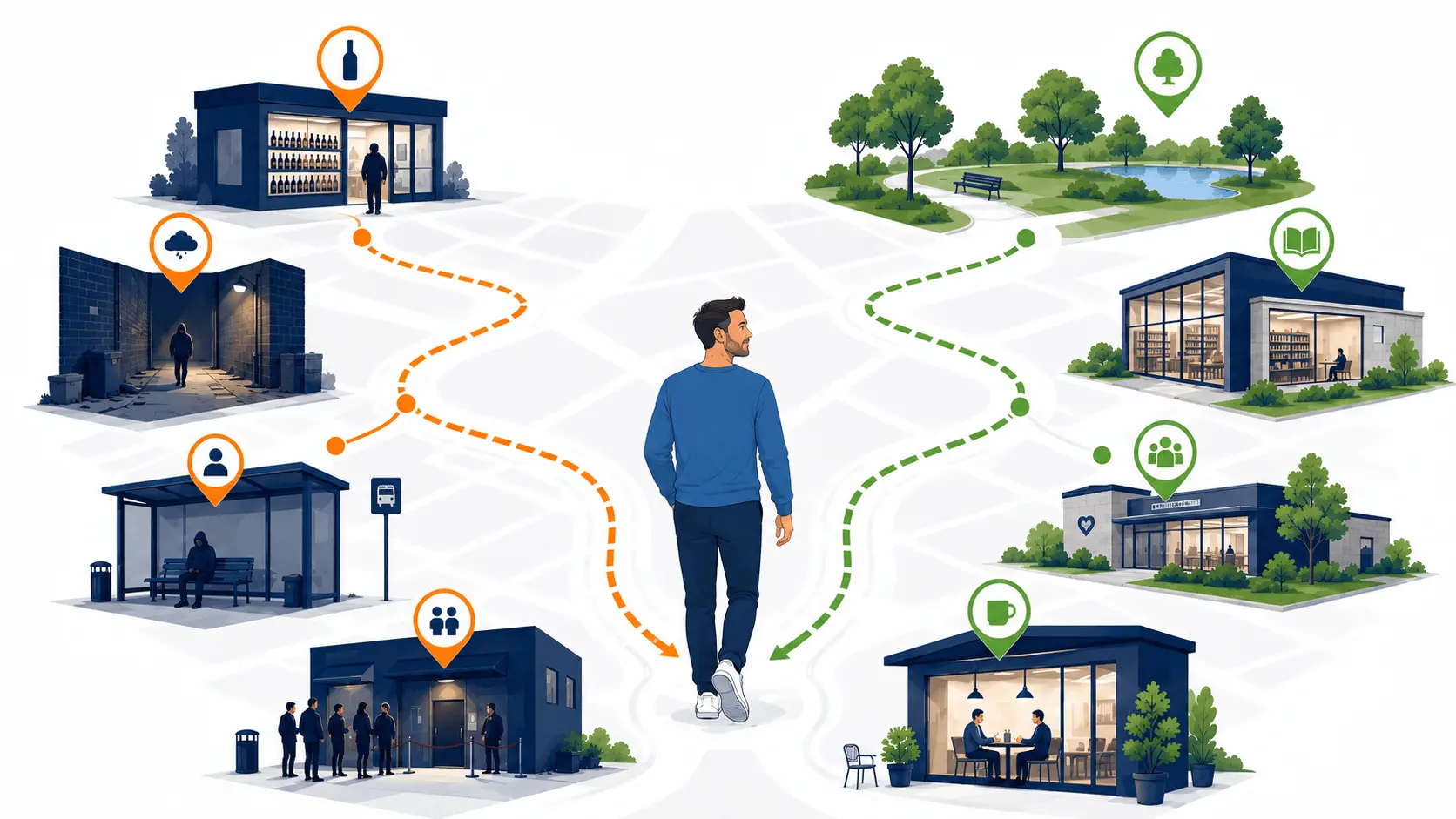
Design out risk · Design in recovery
Removing a cue is only half the job.
Empty space can quickly fill with the old pattern when stress, boredom or loneliness returns. The method pairs friction with something worth moving towards: relief, connection, food, sleep, movement, meaning or support.
Design out Reduce cues, access and automatic routes where you can.
Design in Make the safer next action easier to notice and begin.
Free, private, practical
Try the method on something real
Six short browser-based tools adapted from the publication. Worksheet notes stay in your browser and are not sent to TD Consultancy.
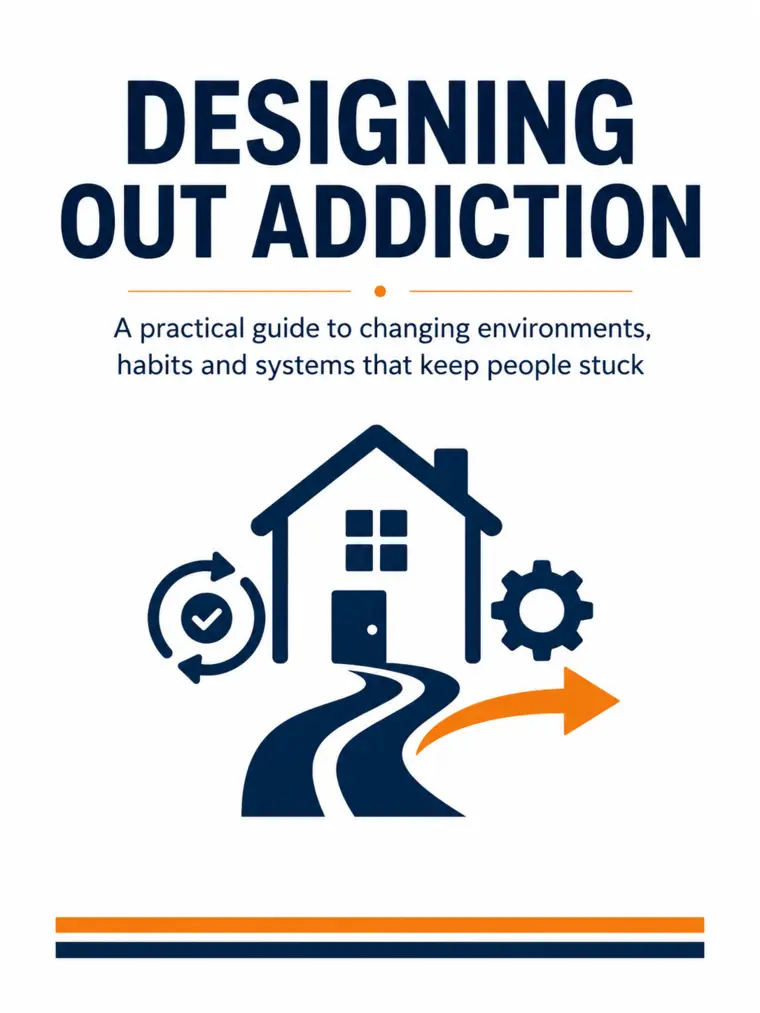
The complete guide + practical workbook
Go deeper than the website.
The publication brings the environmental model together with the complete 30-day approach and more than 50 write-in tools for mapping patterns, redesigning everyday life and protecting progress.
- Home, routes, phones, money and relationships
- Housing, community, workplace and service design
- The full four-week programme and write-in planning pages
For teams and organisations
Change the conditions around practice, too.
Explore how housing, access, waiting environments, re-entry, transport and service routines can add friction to support — or make it easier to use.