
Bedroom
Think about sleep, late-night phone use, visible cues and what is within easy reach when energy is lowest.
Home · routes · routines
A home, route or time of day can quietly teach a sequence. The aim is not to create a perfect recovery home. It is to notice where the old pattern is being rehearsed and make one safer action easier to start.
Last reviewed: 6 August 2026
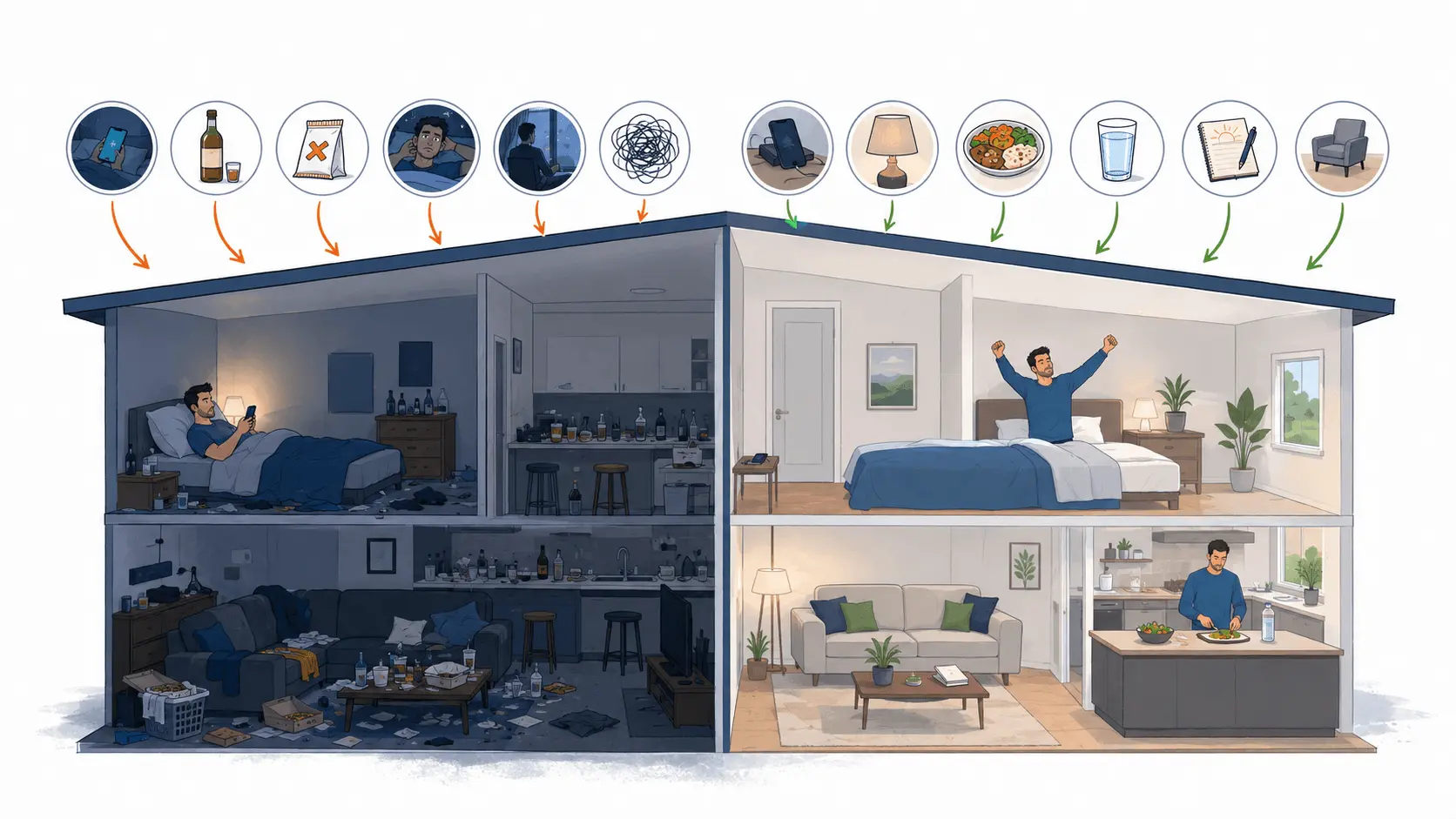
The home teaches habits
Visible cues can keep a pattern close. So can where the phone charges, what happens after work, whether food is available, the chair used for late-night scrolling, or the route from the front door to the next habitual action.
Think about sleep, late-night phone use, visible cues and what is within easy reach when energy is lowest.
Food and hydration can be protective design features when hunger or depletion regularly comes before risk.
Look at where the old routine starts, what is visible and whether there is a realistic alternative activity.
Preparation at the exit point can change routes: keys, reminders, support contacts and a planned destination.
A shower or wash can be a small state-change cue and part of a calmer transition routine.
Shared homes need negotiated, realistic changes. One person cannot control everyone else’s behaviour or belongings.
Late-night phone use, poor sleep and visible cues can make the hardest part of the day more automatic.
Move one cue, protect sleep and make the first calming action easier to reach.
Low-energy version: charge the phone away from the bed and prepare the room before evening.
Design for the difficult day
A plan designed for a calm, motivated morning can fail at 10 pm when someone is tired, hungry, lonely or overwhelmed. Low-energy design reduces decisions: easier food, visible water, pre-agreed contact, fewer notifications and a first step small enough to start.
Routes and exposure
A commute, walk, school run or trip to the shops can repeatedly pass the same people, venues, supply points or advertising. Mapping red, amber and green places can reveal where a different turn, time or destination would create distance from an automatic sequence.
Places that reliably pull the old pattern closer. Avoid or redesign exposure where that is possible and safe.
Mixed places where risk depends on time, company, money, stress or body state.
Places that support the next useful action: a library, park, gym, café, group, trusted person, health service or quiet space.
Where control is limited
Hostels, temporary accommodation, shared housing, domestic abuse, exploitation, cuckooing, unsafe visitors and neighbourhood drug-market pressure can make simple home-design advice unrealistic or unsafe.
Evidence links
Free tool
Map one everyday setting and choose a realistic change to test this week.